
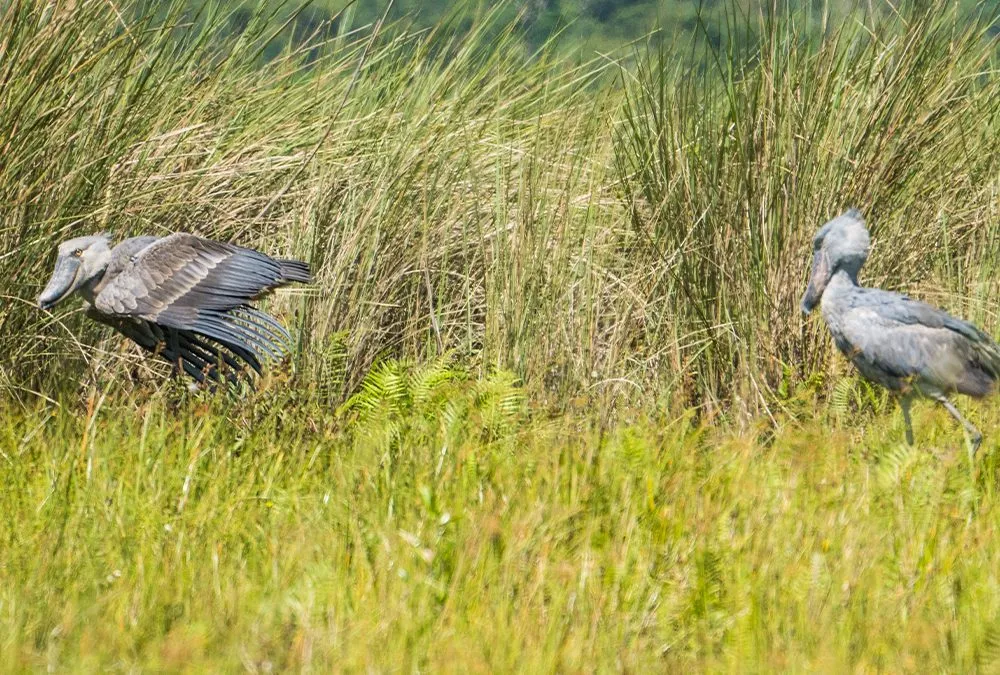
The shoebill stork is one of Africa’s most fascinating and unusual birds. With its enormous shoe-shaped bill, tall body, powerful legs and prehistoric appearance, the shoebill characteristics attracts birdwatchers, wildlife photographers and safari travelers from around the world. The shoebills are found in central and East Africa in the following countries: South Sudan, Uganda, Tanzania, Zambia and eastern Democratic Republic of Congo.
But did you know that male and female shoebills can have slightly different characteristics? Although they look very similar, careful observation can reveal differences in their size, bill shape, behavior and breeding roles.
If you are planning a Uganda safari, seeing a shoebill in its natural habitat can become one of the most memorable experiences of your trip. Uganda offers some excellent places to search for this rare bird, including Mabamba Swamp, near Entebbe.
What Is a Shoebill Stork?
The shoebill, scientifically known as Balaeniceps rex, is a large wetland bird native to tropical East Africa. Despite its common name, the shoebill is not a true stork. Scientists place it in its own family, Balaenicipitidae.
The bird gets its name from its enormous bill, which looks like a shoe. The bill has a sharp hook at the end and helps the shoebill catch fish, lungfish, frogs, reptiles and other wetland prey. Shoebills usually live alone but they come together during mating season.
Its huge bill is one of the main reasons travelers want to see this remarkable bird during Uganda birding tours.
Characteristics of a Male Shoebill Stork
The male shoebill generally shares the same overall appearance as the female, the characteristics making the two sexes difficult to distinguish in the field.
However, male shoebills can be slightly larger than females. They may also have longer and broader bill, although these differences are not always obvious.
A male shoebill has several remarkable characteristics:
🪱A very large shoe-shaped bill
🪽Grey-blue plumage
🦿Long legs suitable for walking through wetlands
🪽Large wings for powerful flight
🧠A tall body and upright posture
🏉Yellowish eyes
📌A strong hooked tip on the bill
During the breeding season, males participate in nest defense and help protect the territory. They also take part in caring for eggs and chicks.
The male can become particularly alert when another bird or potential threat approaches the nesting area.
The male shoebill pretends to be shy as the canoe move around the wetland the moments it senses its sound it sometimes flies a way.
Characteristic of a Female Shoebill Stork
Female shoebills look remarkably characteristics of males. This makes it difficult for visitors to identify the sex of a shoebill simply by looking at it.
The female usually stand firm before people it is not shy; it has the same grey plumage, enormous bill, long legs and powerful body structure. Females may be slightly smaller than males, but confidence provide a reliable identification.
During breeding, the female plays an important role in incubation and chick care. Both parents contribute to raising their young, making shoebill parenting an interesting part of their natural history and one strongest chick will survive out of 2-3 hatched eggs.
One fascinating behavior is how adult shoebills carefully regulate the temperature of their eggs. In hot weather, they may bring water to the nest and use it to cool the eggs.
How Can You Tell the characteristics a Male and Female Shoebill?
This is one of the most common questions asked by birdwatchers.
The truth is that male and female shoebills are very difficult to distinguish visually. Their plumage is almost identical, and their body shapes are very similar.
Experienced researchers may use differences in body size, bill dimensions, behavior and other observations to help determine sex. However, these characteristics are not always reliable enough for a tourist observing a shoebill from a boat.
Therefore, if you visit Mabamba Swamp and see two shoebills, do not assume that you can identify the male and female simply by looking at them.
Shoebill Behavior
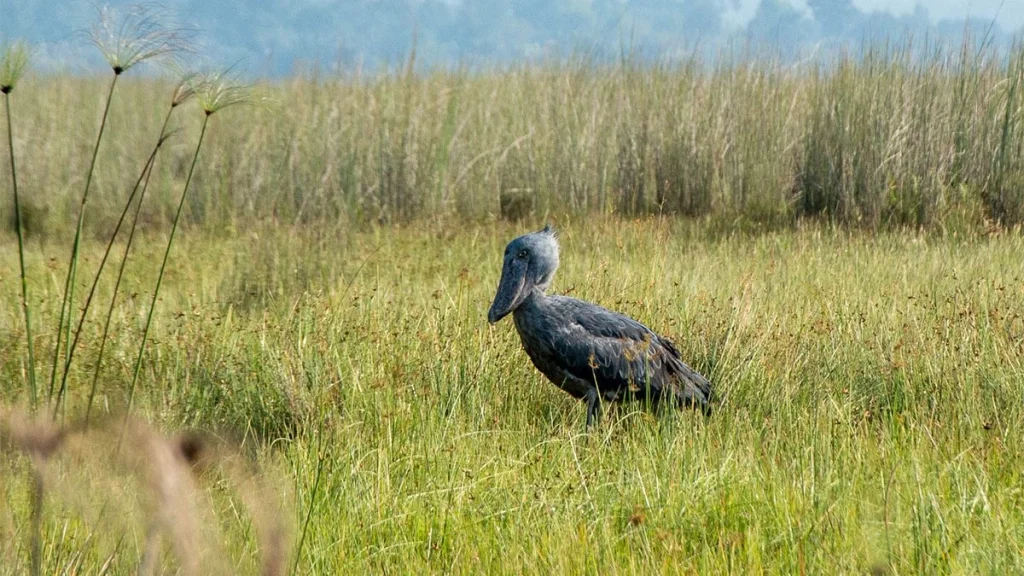
Shoebills are famous for their patience. They can remain almost completely still for long periods while waiting for prey.
This behavior makes them fascinating to photograph. A shoebill may stand motionless among papyrus vegetation before suddenly moving its head and striking the water with its massive bill.
Their hunting technique requires precision. The bird often watches carefully before making a rapid attack.
Shoebills can also produce interesting sounds. One of their most recognizable behaviors is bill-clattering, especially around the nest or during social interactions.
Shoebill Breeding and Family Life
Shoebills usually build their nests in wetland vegetation. The parents work together to protect the nest and raise their chicks.
A female can lay several eggs, but raising more than one chick successfully can be difficult. Competition between chicks may occur, particularly when food is limited.
The parents provide food and protection while the young birds develop.
This family behavior makes shoebill sightings particularly valuable because visitors may sometimes see adults with young birds in suitable breeding areas.
Where Can You See Shoebills in Uganda?
Uganda is one of the best destinations for travelers interested in seeing shoebills in the wild.
One of the most famous locations is Mabamba Swamp, located near Lake Victoria and relatively close to Entebbe. Visitors can explore the wetland by traditional canoe with a local guide who understands where shoebills are commonly found.
A Mabamba Swamp shoebill tour can easily be included at the beginning or end of a Uganda safari.
Other wetlands in Uganda can also provide opportunities to search for shoebills. However, sightings are never guaranteed because these are wild birds and their movements depend on water levels, food availability, weather, and other environmental conditions.
Why Is the Shoebill Important to Uganda Tourism?
The shoebill has become an important attraction for Uganda's growing birdwatching tourism sector.
Unlike traditional wildlife safaris that focus mainly on lions, elephants, leopards and gorillas, birdwatching gives travelers another reason to explore Uganda's wetlands, forests, lakes and savannahs.
The shoebill also encourages conservation because protecting its wetland habitat benefits many other species.
For travelers interested in photography, birding, nature and unique wildlife experiences, searching for a shoebill can add something special to a Uganda safari.
Best Time to Search for a Shoebill
You can search for shoebills in Uganda throughout the year. However, local conditions can influence the chances of finding one.
Early morning is often a good time for birdwatching because temperatures are cooler and wildlife can be active. A knowledgeable local guide can also improve your chances because guides understand the wetland environment and know areas where shoebills are frequently observed.
Always maintain a respectful distance and avoid disturbing the birds, especially when they are nesting or caring for chicks.
Book Your Shoebill Experience in Uganda
Seeing a shoebill in the wild is more than simply ticking another bird off your wildlife list. It gives you the opportunity to experience one of Africa's most unusual wetland species in its natural environment.
Whether you are a dedicated birder, wildlife photographer, first-time visitor to Africa, or simply curious about unusual animals, a shoebill experience in Uganda can become a highlight of your journey.
You can combine a Mabamba Swamp shoebill experience with other Uganda attractions, including gorilla trekking, chimpanzee tracking, wildlife safaris, boat cruises and cultural experiences.
Uganda offers much more than the famous Big Five. From its forests and wetlands to its mountains and savannahs, the country provides unforgettable encounters with wildlife.
Plan your Uganda safari and discover the remarkable shoebill stork contact us: info@ugandatouristguide.com